- ! ! ! ! ! ! ! ! ! ! ! ! ! Latest Updates
- ! ! ! ! ! ! ! ! ! ! ! ! ! Latest Updates
- ! ! ! ! ! ! ! ! ! ! ! ! ! Latest Updates
- Home
- Boa constrictor subspecies
- Boa constrictor - Interesting Facts
- More boa information
- Boa Gallery
- Boas for Sale
- Contact






Boa constrictor longicauda
Distribution areaProvince Tumbes, North Peru
Estimated average length of mature Boa c. imperator females 2m (6,5 ft)
Taxonomic status Subspecies recognized by the CITES convention
| Top Bloodline |
| Zero |
Boa constrictor Longicauda information| longtail boa | Tumbesboa | Boa constrictor Tumbes Peru | black & white Longicauda | yellow & black Longicauda | Lasereye Longicauda | anerythristic Boa c. longicauda | Boa constrictor longicauda variants | Bill Edelbrock Longicauda bloodline | Bob Harding longicauda bloodline
Boa c. longicauda offspring for sale
The scale-count of Boa c. longicauda and Boa c. ortonii is identic. Therefore, and because of the corresponding distribution areas a number of taxonomists are convinced, that Boa c. longicauda und Boa c. ortonii are identic, or rather that Boa c. longicauda is a color variant of Boa c. ortonii.
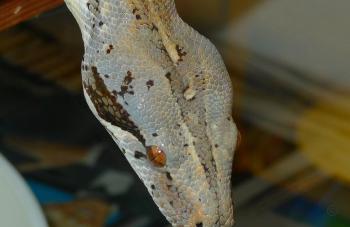
Boa c. longicauda, common name: longtail boa was first described by Robert Price and Paul Russo and is hardly known, altough it is one of the most beautiful members of the Boa constrictor family. When we see these animals for the first time, we succumb to the fascination for these marvelous animals.
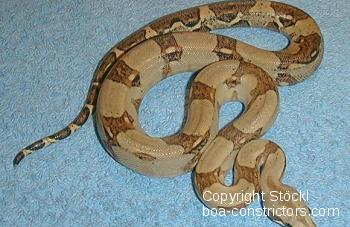
The primary features are the head-markings. There is a mid-dorsal longitudinal spear-shaped black band, which may bulge laterally at the level of the eyes. The thick pre-ocular stripes are darkgrey or black. Depending on these markings the long-tail boas look like indians with warpaint. There is no other subspecies of Boa constrictor with such clear-cut markings at the head.
The assertion of Price and Russo, that Boa c. longicauda has the longest tail of all subspecies of Boa constrictor was refuted, in the mean time, by the american "reptile guru", Philippe de Vosjoli (an expert and enthusiast of this subspecies, just as we are).
Adult females get an average length of about 7ft. The shade of the tumbesboa is very variable.
It reaches from gold-colored over gold-brown to gray. However, the gold colored areas between the tail-spots are found on all specimens.
The few long-tail boas that exist in the USA in the 90ies were animals confiscated by the American customs and their (few) offspring. However, it is not advisable to travel in the distribution – area of Boa c. longicauda, as peruvian terrorists are up to mischief in that region.
Now we want to show you the developement of Boa c. longicauda within the first 3 years of life.
For this documentation we used the black/white variation of Boa c. longicauda. But this is also applicable for all kind of variations of this beautiful boa.